Feline shampoo is a bigger business than most people realize. One September report puts the cat shampoo segment at around USD 400 million, growing roughly 6% a year, and Catster spent the middle of the month publishing vet-reviewed pieces on human shampoo, baby shampoo and waterless options. It isn’t hard to see why. More owners are buying grooming products, and plenty of them grab the wrong bottle. The truth is that most cats never need a bath. But if yours does, what you pour matters more than how you do it. So let’s look at when feline shampoo makes sense, what to keep away from your cat, and how to pick one that suits her skin.
Does Your Cat Really Need a Bath? Usually, No
Ask a vet and you’ll hear the same thing: most cats do a great job cleaning themselves. Baths come into it when something messy or sticky lands on the coat, when a medical condition gets in the way of grooming, or when an older or overweight cat can’t reach everywhere anymore. Sphynx owners are the exception to the exception, since hairless cats often need weekly baths to manage skin oil.
For a healthy coat, the old rule still holds: no more than once a month. Medicated baths follow their own schedule, usually once or twice a week and up to three times for a severe skin infection, and your vet decides that.
So don’t think of feline shampoo as part of a routine. If your cat is itchy or flaky, book the vet first. A new bottle won’t fix whatever is causing it.
Why Your Own Shampoo Is the Wrong Bottle
Human shampoo is more acidic than cat shampoo, and cats have thinner, more sensitive skin than we do. Sources quote slightly different pH numbers for cat skin, so I wouldn’t fixate on them. The practical point is the same everywhere. Even baby shampoo can strip away the natural oils that protect your pet’s skin.
Ingredients matter just as much. Sulfates, parabens, artificial fragrances and colors are all common in human products, and all can irritate a cat’s skin. Cats also lick their coats, so whatever stays behind ends up in their mouths.
Dog products are the bigger worry. Permethrin, found in many dog flea treatments, is highly toxic to cats, yet it remains one of the most common causes of poisoning in cats worldwide. One vet-reviewed guide cites a review of 42 poisoning cases in which 86% of cats had tremors and 33% had seizures. Exposure isn’t always direct either. A cat that rubs against a recently treated dog can pick it up, which is why keeping them apart for 72 hours is the standard advice. If you’re unsure what you’re seeing, call your vet or Pet Poison Helpline at 1-800-213-6680.
Oatmeal, Medicated or Waterless: Which One Fits?
For dry or sensitive skin, oatmeal-based, fragrance-free formulas are the usual pick. Catster’s 2026 hypoallergenic list names Hepper’s colloidal oatmeal shampoo as its best overall choice, though it also notes that one rival product contains neem, an ingredient vets don’t fully agree on. Cost won’t tell you much. The $10 to $20 band is where nearly half of Amazon’s cat shampoo listings sit.
Medicated shampoos are a different thing altogether. Formulas with 2% miconazole nitrate and chlorhexidine gluconate go after fungus, bacteria, yeast and ringworm. The directions usually say to let the lather soak in for five to ten minutes before rinsing. These are treatments, so use them with your vet’s blessing, not as a general cleanser.
Waterless foams and sprays are a lifesaver if your cat loses it at the sight of a tub. There’s one catch. With no rinse step, anything left on the coat can be swallowed during grooming, so stick to cat-only products and never use human dry shampoo. Unless the label says otherwise, skip them for kittens under six months and for pregnant or nursing cats.
Bath Day Without the Battle
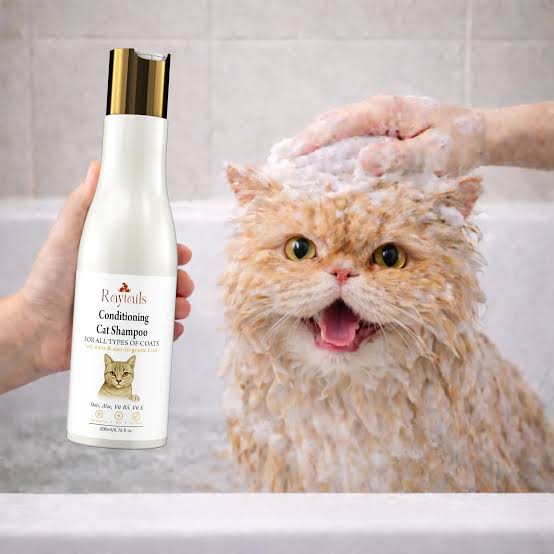
Set everything up before you bring the cat in. You’ll want several towels, a washcloth, and warm water at about 102 degrees, close to a cat’s body temperature. The bucket method works well for small cats: one container to wet her, another to rinse. Keep a hand on her the whole time, wrap her in a dry towel afterward, and if she tolerates a blow dryer, use only the lowest setting.
Quick Answers on Feline Shampoo
Can I use baby shampoo on a cat?
No. It can still strip natural oils and leave the skin dry or itchy. Pick a product labeled for cats.
How often should I use feline shampoo?
Healthy cats rarely need it. Once a month at most for a healthy coat. Medicated routines follow your vet’s instructions.
Is waterless feline shampoo safe?
Yes, when it’s made for cats and used as directed. Check the label for age and pregnancy limits.
What if my cat licks a dog flea treatment?
Call your vet or Pet Poison Helpline right away. If you catch it within minutes and there are no symptoms, repeated washes with liquid dish soap can remove the product, but tremors or seizures mean an emergency vet visit.
The Short Version
Use feline shampoo sparingly and only when there’s a reason. Choose a cat-specific formula and treat anything labeled for dogs or humans as off limits. Stores will keep stocking more options every year, but for a skin problem, your vet’s advice beats any label