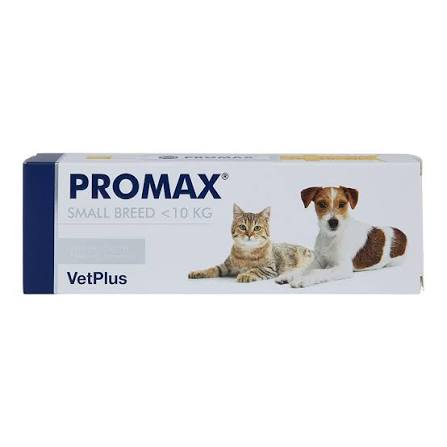
If you’ve ever stood in your kitchen at 2 a.m. cleaning up after a sick dog, you already know why Promax for animals sells so well. Made by VetPlus, it’s a flavoured paste in a dial syringe that mixes clay, a probiotic and prebiotic fibre, and it’s aimed at dogs and cats with a mild stomach upset. Shops in the UK, New Zealand, Switzerland and Germany carry it, and owners keep reviewing it. What most buyers don’t ask is whether they’re using it properly, or whether their pet needs a vet instead. Let’s sort that out.
Why Do So Many Owners Keep a Syringe in the Cupboard?
Because stomach trouble is common and it never picks a convenient time. A new food, a scavenged chicken bone, a stressful week at the kennel, a parasite, an infection: any of them can do it. In dogs the usual culprit is colitis, an inflamed large bowel. The dog squats again and again, passes a little loose stool with mucus, and sometimes a streak of fresh blood. Early on there may be vomiting too.
Promax is sold as short-term nutritional support, not as a drug. One syringe is one three-day course, and you turn the dial each day so you can’t overdose by accident. Owners like that. One reviewer with four dogs keeps a syringe around to try before driving to the vet, and another says the vet charged her far more for the same thing.
Ratings are strong. A UK marketplace listing shows 24 of 25 ratings at five stars. I’d take that with a pinch of salt, though. People rarely know what actually caused the upset, and plenty of mild cases clear up by themselves in a couple of days.
What’s Actually Inside the Paste?
Product pages describe “triple action”, and it breaks down fairly simply.
Montmorillonite clay comes first. It’s said to bind toxins and coat the gut lining. Then there’s a probiotic, which retailers describe only as an EU-registered strain. The third part is prebiotic material: inulin, pectin, and yeast products that supply beta glucans and mannanoligosaccharides, all in a sunflower oil base. The medium-breed listing also names porcine liver powder, so if your pet reacts to pork, check the label first.
Now the evidence. A 2019 randomised, placebo-controlled trial in the Journal of Veterinary Internal Medicine tested a similar paste from another company, Pro-Kolin Advanced, which combines Enterococcus faecium, kaolin and montmorillonite clay, psyllium, pectin and beta glucan. It enrolled 148 dogs with acute diarrhoea. Wider veterinary literature also describes many placebo-controlled probiotic studies in acute canine diarrhoea. That’s decent support for this type of product. But I couldn’t find a published trial of Promax itself, so the evidence belongs to the category, not the brand.
Getting the Dose Right (It’s Easier Than You’d Think)
There are three sizes, matched to body weight, and one dose a day for three days.
The 9 ml small-breed syringe is for cats and dogs under 10 kg, at 3 ml daily. The 18 ml medium syringe covers dogs from 10 to 25 kg, at 6 ml daily. The 30 ml large syringe is for dogs over 25 kg, at 10 ml daily.
For cats, a Swiss retailer advises anything from a third of a daily dose up to a full one, depending on weight. You can give it with or without food, and the same retailer says lactating bitches can have it. Still, your pack label and your vet’s advice come first, especially for very young, elderly or medicated pets.

When the Paste Isn’t Enough
A supplement can settle a mild upset. It can’t tell you why your pet is sick.
Ring the vet rather than reaching for the syringe if you see lots of blood or black, tarry stool, if the vomiting keeps coming back, or if your pet is dull, won’t drink, or has a tight or swollen belly. Puppies, kittens and very old animals should go straight to the clinic too. And if three days pass with no clear improvement, stop and get them examined. The 2019 trial excluded dogs whose signs weren’t suitable for simple home-style management, and that’s a sensible line to borrow. Behind a “tummy bug” there can be parasites, toxins, infection or something chronic.
Four Questions People Keep Asking
Can cats have it?
Yes. The small-breed syringe is listed for cats as well as dogs under 10 kg, and the dose is scaled to weight. If your cat has been unwell for more than a day, though, don’t wait on the paste.
How fast does it work?
Reviewers say anything from a couple of hours to a day. That’s anecdote. The product is built as a three-day course, so judge it over that window.
Is it okay as a daily probiotic?
Not really. It’s meant for short-term use. One owner keeps Promax for flare-ups and gives a separate daily probiotic. If your pet has a permanently touchy gut, talk to your vet about a longer-term plan.
Do I need a prescription?
Several online pet shops and pharmacies sell it without one, but rules differ from country to country. A quick call to your vet or pharmacist settles it.
So, Is It Worth Buying?
For a mild, short-lived upset in an otherwise bright and eating pet, Promax is a reasonable thing to have in the cupboard. Pick the size for your pet’s weight, finish the three days, and don’t treat it as a stand-in for a proper exam. If the stool looks alarming or your pet seems really unwell, the syringe can wait and the vet can’t.