A dog grooming bath is no longer something owners hand off to the salon. According to the American Pet Products Association 2026 Dog Report, 51 percent of dog owners now groom their dogs at home, and spending on salon and mobile grooming dropped through 2025 as people took routine care into their own hands. That shift matters right now because a rushed or badly planned bath leaves a dog stressed, itchy and tangled, while a calm one builds trust and protects the skin. If you have been guessing your way through bath day, the details below, drawn from veterinary and professional groomer advice published in 2026, will save you time, water and a few soaked bathroom floors.
Why the Brush Comes Before the Water
Every dog grooming bath should start with a brush, not a tap. Water tightens mats in medium and long coats, which turns a small tangle into a knot that pulls at the skin. Brushing first removes loose fur and debris so the shampoo reaches the skin instead of sitting on top of the dirt.
Match the tool to the coat. A slicker brush with protected tips works well on thick coats, though it should be introduced slowly so the dog does not learn to dread it. Short coats need far less work, but a quick pass still lifts dead hair. While you brush, check the ears, paws and belly for burrs, scratches or anything unusual you would rather find now than after the dog is soaked.
Set everything out before the dog gets wet. You need dog shampoo, several towels, treats and a non-slip mat. A professional groomer writing for Chewy recommends a grooming loop attached to a faucet or tie-out stake, because many dogs would rather run than endure a wash. Pride and Groom adds a simple precaution of placing cotton balls in the ears to keep water out, then removing them afterward.
Lukewarm Water, Gentle Shampoo and a Longer Rinse
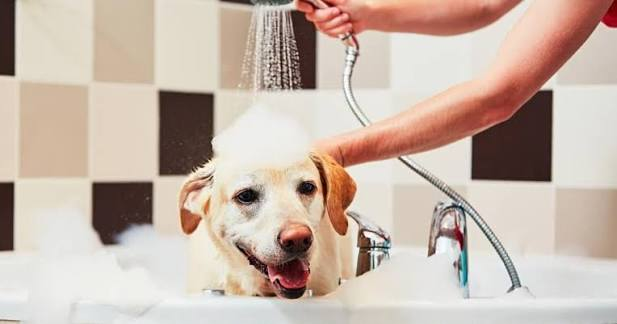
Lukewarm water suits most dogs, since both hot and cold water can make them uncomfortable. Wet the coat from the tips down to the base so the shampoo spreads evenly. If you are bathing outdoors, check the hose pressure first, and if it is strong, fill a bucket and pour with a cup instead. Vetstream suggests a shower-mixer tap for indoor baths because it makes rinsing much faster and more controlled.
A dog grooming bath goes better when shampoo is worked in gently, starting at the neck and moving back toward the tail. Keep it away from the eyes and ears, and use a product made for dogs rather than a human one. Then rinse for longer than feels necessary. Leftover shampoo is one of the most common reasons dogs scratch after a wash, and a thorough rinse is the cheapest fix.
Some dogs panic at the sight of a tub, and short sessions, a calm voice and plenty of treats do more than any gadget. Dogster published several vet-reviewed pieces in June 2026 on dogs that hate water, and the common thread is patience. Climate matters too. A March 2026 guide from ABK Grooming in India points out that dust, humidity and heat make regular baths especially useful for pets in that region, a reminder that owners in hot, dusty places may need to adjust their routine.
The Bath Schedule Most Owners Get Wrong
More baths do not mean a cleaner dog. Viva Essence Pet notes that a monthly bath is enough for most dogs unless they get particularly dirty, and that over-bathing strips the natural oils the skin depends on. Dogster makes a similar point in a guide updated in June 2026, saying many dogs only need washing when they smell or are visibly dirty.
There are exceptions. Dogs with skin conditions follow a different rhythm, and some medicated shampoos call for bathing as often as twice a week. In that case the dog grooming bath schedule should come from your vet and not from a blog post, and the instructions on the shampoo should be followed exactly.
Between baths, wipes and waterless shampoo can handle the small messes. PetMD recommends them for spot cleaning after walks, travel or rainy days, and that advice reached mainstream coverage in The Star in late October 2026. When the dog only has muddy paws or a dusty chest, skip the full dog grooming bath and clean just the problem area.
Drying Is Half the Job
A wet dog left to air dry can pick up that familiar damp smell, and a coat that stays wet next to the skin can become irritated. Towel the dog thoroughly first, pressing and squeezing rather than rubbing, which can tangle longer coats. Then consider a velocity dryer. The Chewy groomer notes that it blasts water and loose fur out of the coat, which cuts down on brushing afterward, especially for dogs that shed heavily.
Keep the dryer moving and watch how your dog reacts, because the noise bothers some animals. When the coat is completely dry, brush again to clear any remaining tangles and loose hair. End every dog grooming bath with a treat and a little praise, so the dog connects the whole process with something good and tolerates the next one with less fuss.
Four Things Owners Keep Searching For
How often should a dog grooming bath happen
For most healthy dogs, about once a month is enough, and less often is fine for dogs that stay clean. Bathe sooner if the dog rolls in something unpleasant or starts to smell. Dogs with skin problems should follow the schedule your vet sets.
Can you do a dog grooming bath without a grooming tub
Yes. Viva Essence Pet points out that many dogs are less anxious in a familiar space, so a walk-in shower works well, and a large sink suits smaller breeds. A non-slip mat and a handheld sprayer make either option easier.
When can a puppy have a bath
Young puppies are delicate, and mother dogs usually keep them clean in the early weeks. Dogster has a vet-reviewed guide on the risks of bathing a puppy too soon, and the safest step is to ask your vet about timing before you start.
What should you do if your dog hates water
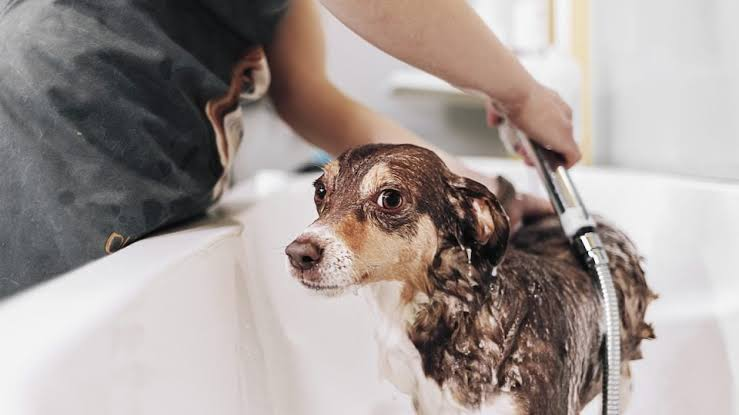
Keep sessions short, use lukewarm water, bring treats and stay calm. Try wiping or waterless shampoo for small messes so full baths stay rare, and build up gradually. If fear is severe, a professional groomer or a trainer can help.
The Takeaway
A good dog grooming bath is simple once the order is right. Brush first, use lukewarm water, rinse longer than you think, dry thoroughly and keep baths to what the coat actually needs. With more owners handling grooming at home in 2026, a patient routine matters more than any expensive product, and your dog will notice the difference long before you do.