Crate beds for puppies sit near the top of almost every new owner’s shopping list, and most people get the timing wrong. Buying guides in 2026 are stuffed with best-of rankings, but the American Kennel Club’s crate-training guide says something they rarely mention: hold off on the bed or blankets until your dog has stopped having accidents and stopped shredding fabric. It sounds backwards when you’re staring at a tiny puppy on a hard plastic tray. Still, a bed added too soon usually ends one of two ways, soaked through or chewed up and swallowed. So let’s sort out when a puppy is actually ready, which styles hold up through teething, and how to size one so it doesn’t undo your potty training.
Wait, Should Your Puppy Even Have a Bed Yet?
Probably not on day one. Besides the AKC’s advice, a trainer who spent years working in a vet’s office suggests keeping the crate completely empty when a puppy first comes home, and says most pups are past the worst of their chewing by around twelve months. Every puppy is different, of course. But the idea is sound: earn the comfort first.
Accidents are the other catch. When a puppy keeps soiling the crate, AKC says removing the bedding for a while can help, because some dogs bury the mess under it and others simply like peeing on something soft. A humane society trainer points out that thick bedding soaks up urine too, so the puppy never feels the wet patch that would normally teach it to hold on. If you’ve already bought a bed, don’t stress. Tuck it away and bring it out once you’re getting dry nights.
Not everyone says no, to be fair. Snoozer, a company that sells crate beds, says go ahead unless your dog is destructive or having accidents all the time, and a vet answering owner questions on Petco says a bed is fine so long as nothing is being chewed off and swallowed. Boil all that down and the rule for crate beds for puppies is pretty simple. Keep the bed in only while the crate stays clean and the fabric stays in one piece.
The Chew-Proof Label Isn’t a Promise
Listings for crate beds for puppies lean hard on chew-proof claims, so read the small print before you click buy. K9 Ballistics’ padded crate pad comes with a 120-day chew-proof promise, yet one review points out it’s built for light to moderate chewers and sends heavy chewers to the brand’s elevated bed instead. A guarantee and a design purpose aren’t the same thing, and a teething puppy will happily test both.
Fewer Zippers, Fewer Problems
How a bed is built matters more than what the label says. iHeartDogs’ pick for puppies has no zippers at all, and Whole Dog Journal likes the heat-sealed Primo Pads because there’s no zipper or stitching for a puppy to worry at. Fewer edges to grab means fewer chances for a shredding habit to start.
$20 vs. $200: What the Price Gap Buys
Prices are all over the place. Big-box washable pads with anti-slip bottoms go for around $20; one listing has a 35-inch pad at $19.99, marked down from $48.99. Kuranda’s raised crate beds, on the other hand, run roughly $87 to $208 depending on frame and size. Your puppy will outgrow this crate in a few months and might destroy the first bed anyway, so a thin, washable pad is the sensible thing to start with. Save the expensive one for the adult dog.
The Size Trap: When Extra Room Backfires
A crate should be just big enough for a puppy to stand up, turn around and lie down. Anything bigger and the puppy can use one end as a toilet and sleep at the other. That means you shouldn’t buy a larger bed just to make a big crate feel cosy. If your wire crate came with a divider, use it and let the puppy grow into the space.
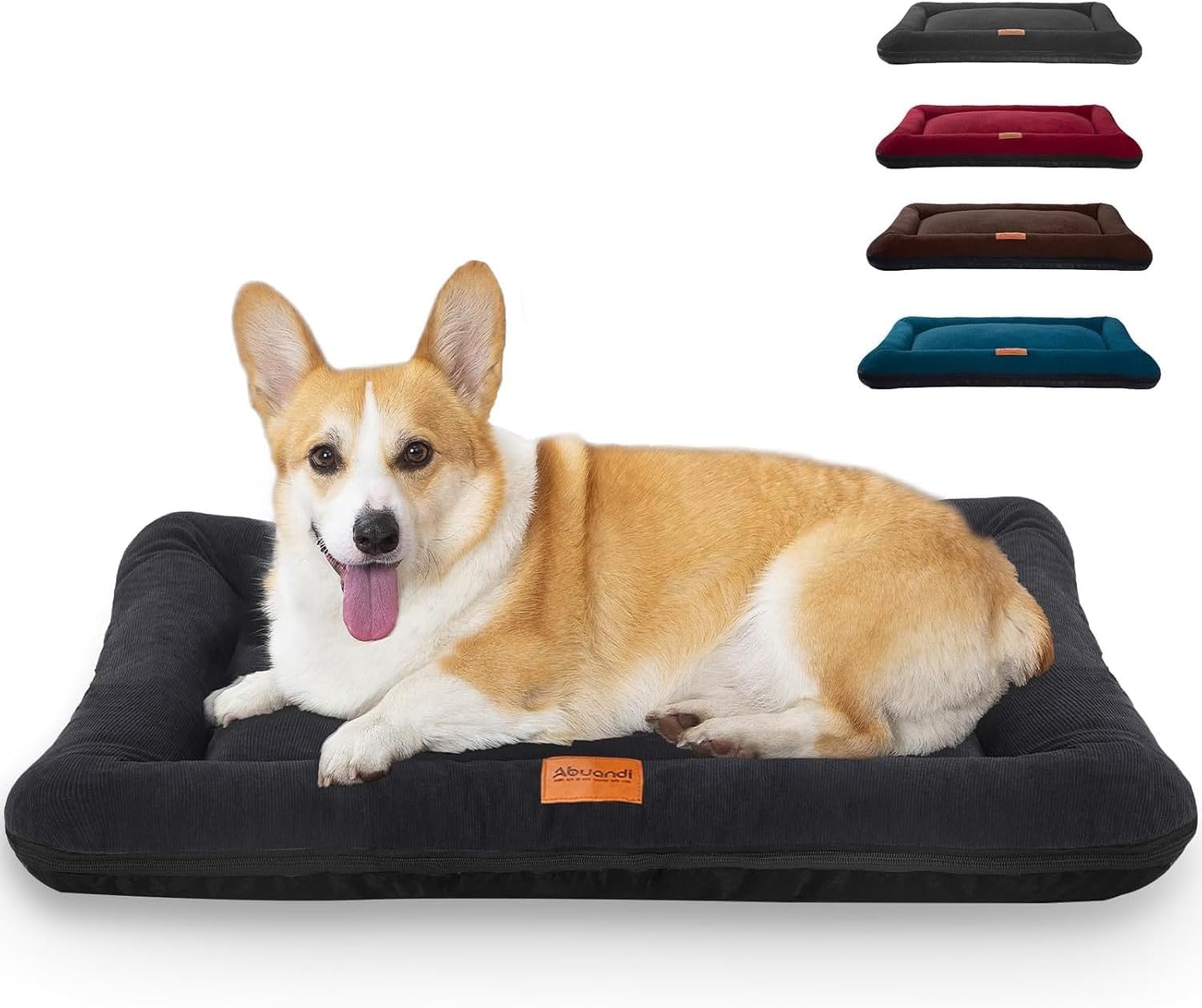
The bed has to fit too. Regular dog beds are thicker than crate pads, so they eat into headroom, and they often don’t match crate dimensions, which leaves gaps or overhang. For a rough benchmark, Snoozer’s crate beds come in 15 by 23 inches (small), 22 by 35 (medium) and 25 by 41 (large). Measure the inside floor of your own crate and choose a flat pad that matches it.
The 24-Hour Rule Every Puppy Owner Should Know
The strongest reason to be strict about bedding is what happens if a puppy swallows it. A vet answering owners on Petco warns that swallowed scraps of crate blankets can cause a life-threatening obstruction, and string or fabric can bunch up the intestines.
Watch for vomiting, low energy, refusing food and a sore belly. If your puppy hasn’t passed a stool 24 hours after swallowing something, treat that as a red flag. Survival odds also fall sharply once a blockage goes 48 hours without treatment.
Found a shredded bed? Take it away. If you know something was swallowed, call your vet right away, because fast action often makes all the difference. Don’t sit and wait for symptoms to appear.
Quick Answers Puppy Owners Keep Searching
What size crate bed does a puppy need?
One that matches the crate floor and stays thin. Measure inside the crate, skip bolsters and thick beds, and move up a size as your puppy grows.
Can I use a blanket instead?
Only while you’re watching. One vet suggests trying something very thin, like a bed sheet, to see whether the puppy still tries to tear it up. If it gets ripped, take it out straight away.
How do I clean a crate bed after accidents?
Wash it properly, because leftover smells can encourage the same mistake again. A bed where the mattress itself is washable, not just the cover, makes life a lot easier.
How long can a puppy stay in the crate?
Not long. Young puppies need frequent breaks and can’t hold it for hours, and leaving them crated too long can make them anxious and turn the crate into somewhere they dread.
Comfort Comes Second
The best crate beds for puppies aren’t the plushest or the priciest. They’re thin, snug, washable, and only added once a pup has shown it won’t shred or soil them. Start with a bare, properly sized crate, bring in a simple pad when the nights stay dry, and keep the orthopedic upgrade for when your dog is grown.