Flea season’s back. So is the usual wall of cat shampoo at every pet store. Each bottle promises to fix dandruff, shedding, fleas, whatever’s bothering your cat this month. Nobody actually reads the label though. They just grab whatever’s on sale. Or whatever smells nice. And that’s the problem. Permethrin is a flea-killing chemical. It sits in roughly half the dog shampoos on that same shelf. It’s also one of the top reasons cats end up at emergency vet clinics every year. This isn’t some rare fluke. It happens every single flea season, over and over. Most owners have no idea until it happens to their own cat.
Cats Aren’t Just Small Dogs, Chemically Speaking
Here’s why this keeps happening. Cats are missing a liver enzyme. Dogs use that enzyme to break down permethrin safely. A dose that’s harmless to a dog can seriously hurt a cat. It can cause muscle tremors. Sometimes full seizures. Sometimes death, if it’s not caught fast enough. Usually it’s not deliberate at all. It’s a “dog and cat” cat shampoo grabbed off the shelf without a second thought. Or a cat that groomed itself after rubbing against a treated dog in the same house. Cat-specific sprays at low concentration are generally fine, according to most vets. But skip any cat shampoo without a clear, printed cat dosage on the label. It’s genuinely not worth saving four dollars on something that could put your cat in an emergency clinic overnight.
Ok, So What Should You Actually Buy
Past the permethrin issue, the rest comes down to comfort, not survival. Cat skin is thinner than ours. It’s also less acidic than human skin. Human shampoo dries it out fast. So does most dog shampoo, even the gentle kind. A good cat shampoo is pH-balanced specifically for feline skin. It skips sulfates entirely. It skips synthetic dye too. It leans on colloidal oatmeal or aloe instead of heavy perfume doing all the work on the label. Tearless formulas matter more for cat shampoo than they do for dog shampoo. Cats squirm and thrash way more mid-bath. Eye contact with regular shampoo is basically guaranteed at some point. If there’s a real skin condition going on — mites, allergies, a stubborn fungal thing — talk to a vet before buying anything. That situation calls for a prescribed chlorhexidine shampoo, not a random bottle off a shelf.
What People Are Actually Buying Right Now
A few names keep showing up over and over in this year’s reviews. Hepper’s colloidal oatmeal cat shampoo is one of them. Pro Pet Works’ 5-in-1 formula is another. Both land as top overall picks across different sites and buying guides. Earthbath’s Hypoallergenic version gets recommended constantly for itchy or reactive skin. John Paul Pet is usually the go-to budget pick. It’s genuinely cheap without being total garbage. TropiClean shows up repeatedly for shedding control, which matters a lot heading into fall. That’s when most cats blow their coats anyway. Burt’s Bees basically owns the kitten-safe, tearless category at this point. Roughly 46% of all cat shampoo listings currently sit in the $10 to $20 price range. That happens to be exactly where labeling gets the vaguest and most exaggerated. Read the actual ingredients. Don’t just trust the price tag or the cute packaging.
Kittens Aren’t Mini Adults
A cat shampoo that’s totally fine for a grown cat isn’t automatically fine for a kitten. A twelve-week-old kitten has even less liver capacity than an adult cat already has. That’s exactly why kitten-specific tearless formulas exist as their own category. Don’t just water down an adult shampoo and assume it’s equivalent. It won’t necessarily dilute the risky parts evenly across the whole mix. Older cats and allergy-prone cats generally do better with fragrance-free formulas. Aging skin reacts harder to anything synthetic added in for smell or color. If a vet is already actively treating something, stick to their exact plan. A random over-the-counter cat shampoo layered on top can actually undercut the prescribed treatment.
How Often Do Cats Even Need This
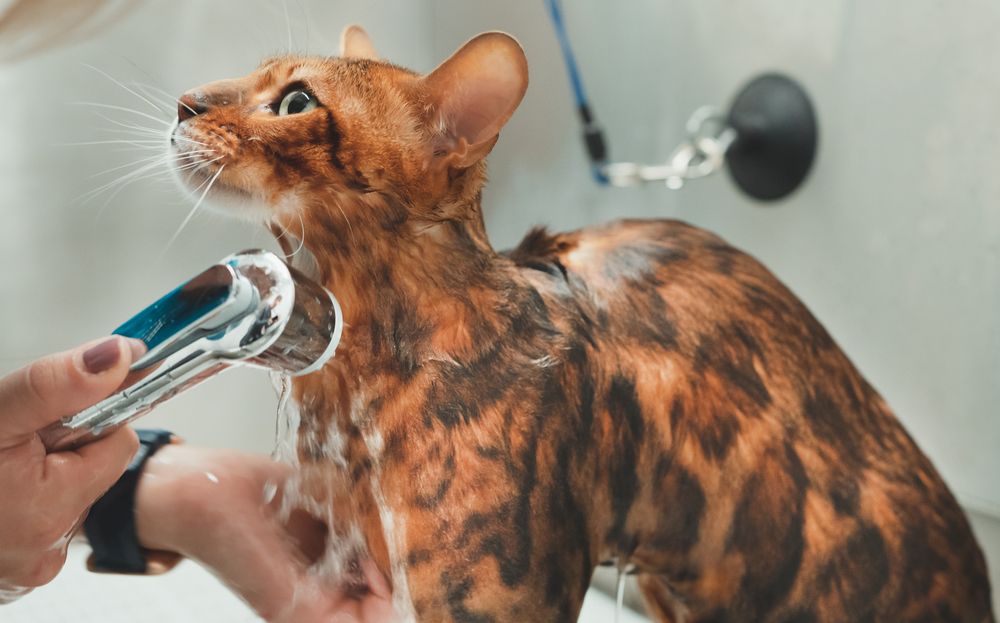
Way less than most people assume. Healthy cats need maybe two or three baths a year, if that. Grooming is basically their full-time job already. Overbathing is actually the more common mistake people make. It strips natural oils from the coat. That causes the exact dryness and itching people end up trying to fix with yet another shampoo. Real reasons to bathe a cat include an active flea infestation. Something greasy or toxic that got on the fur. A long coat that mats easily and needs deep cleaning. Or recovery from surgery, when a cat can’t reach a bandaged spot itself. In any of those cases, lukewarm water and a properly diluted cat shampoo do the real work. The brand name on the bottle matters a lot less than people think it does.
Quick Questions People Actually Ask
Can I use human or dog shampoo just once, in a pinch? No, don’t risk it. Human shampoo is too acidic for cat skin, even for a single wash. Dog shampoo might contain permethrin. It’s not worth it even one time.
What ingredients should I actually avoid on the label? Permethrin first, above everything else. After that, artificial fragrance, sulfates, and tea tree oil. All fine for humans. Genuinely toxic for cats in concentrated amounts.
Is waterless shampoo actually good enough? Fine for a quick touch-up between real baths. Not enough for an active flea problem or a skin infection. Those situations need a real water rinse to work properly.
How do I know if my cat is reacting badly? Watch for scratching, redness, or sudden hair loss within a few hours. Drooling or visible tremors mean one thing: call a vet immediately. Don’t wait around to see if it passes.
Bottom Line
Permethrin is the one thing worth checking before anything else on that shelf. Price, scent, and brand name don’t matter at all if you get that part wrong. Everything else this year comes down to basics done properly. Decent pH balance. Gentle ingredients. Labels that actually tell you what’s inside instead of just what it smells like.