Most people don’t search for a bowl for dogs to slow eating until it’s too late. Their dog empties a full bowl in thirty seconds. Then comes the coughing. Or the gagging. Or the food coming right back up minutes later. That’s usually the moment someone types “bowl for dogs to slow eating” into Google at eleven at night, half-worried and half-annoyed. This year, there’s a real reason to take that search seriously. New research on raised feeders found something surprising. Elevated bowls may double a dog’s bloat risk. That single finding pushed the bowl for dogs to slow eating from “nice to have” to near-essential advice for a lot of owners who never thought twice about mealtime setup before.
The Old Advice Just Got Flipped
For years, vets recommended raised feeders for big dogs. The logic seemed sound at the time. Less neck strain. More natural posture while eating. Then a study tracked over 1,600 large and giant breed dogs over time. The result was the opposite of what everyone expected going in. Dogs on elevated stands developed GDV at nearly twice the rate of dogs eating off the floor. GDV is the twisted-stomach emergency known as bloat, and it kills fast. Researchers think they know why the numbers looked this way. Elevated feeders seem to speed dogs up without anyone noticing. Faster eating, in that same data, was linked to higher bloat risk on its own. So the fix isn’t just moving the bowl back down to the floor. It’s pairing floor placement with an actual bowl for dogs to slow eating. Something that fights the gulping directly, instead of just changing where the gulping happens.
What This Bowl Actually Does
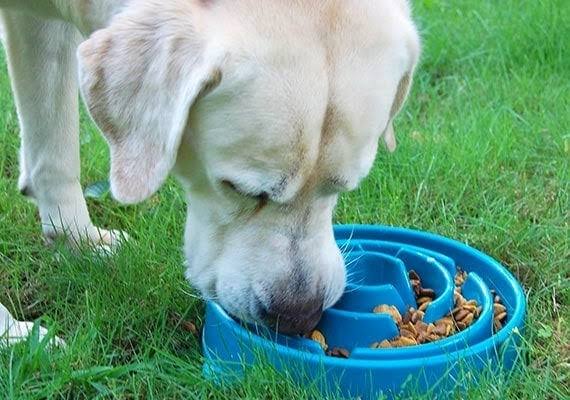
A bowl for dogs to slow eating isn’t complicated. It’s really just a regular bowl with ridges, spirals, or a maze built into the bottom. Dogs can’t scoop food up in big open mouthfuls anymore. They have to nose kibble around channels instead. One small bite at a time, over and over. Testers have clocked meals going from fifteen seconds flat to three or five full minutes with a decent design. Some deeper maze patterns claim to slow eating by up to 10x compared to a flat bowl. Why does any of this matter beyond just buying time? Smaller bites mean less swallowed air with every mouthful. A slower pace means the stomach isn’t hit with a huge volume of food all at once. That’s the entire point of a bowl for dogs to slow eating. Not to make mealtime harder for no reason. To break the gulp-everything-immediately habit that so many dogs fall into, especially ones that eat like the food might disappear.
Let’s Not Oversell the Bloat Link
Here’s the honest part most product listings skip over completely. The science linking eating speed to bloat is genuinely mixed, not settled. Several older studies on at-risk breeds found no real connection between speed and GDV at all. A smaller number did flag fast eating as a contributing risk factor. One thing does stay consistent across almost every study, though. No research found that slow eating increases bloat risk in any way. So “may help” is really the fairest, most honest claim anyone can make about a bowl for dogs to slow eating and its effect on bloat prevention specifically. What is well documented, separately from bloat, is simpler and less debated. Fast eating causes regurgitation fairly often. It causes excess gas. It causes general post-meal discomfort that owners just get used to seeing. So even setting the bloat question aside completely, a bowl for dogs to slow eating still earns its place in a normal feeding routine. High-risk breed? Family history of GDV? Use the bowl, absolutely. But also talk to your vet directly, because a bowl alone isn’t a substitute for that conversation or for closer monitoring.
Not Every Bowl Fits Every Dog
This part gets skipped a lot, and then owners wonder why their dog suddenly hates mealtime. Small dogs need shallow ridges, not deep ones. Something in the half-cup to two-cup capacity range usually works best for them. A maze built for a Labrador will just frustrate a Chihuahua and leave food stuck out of reach. Flat-faced breeds like pugs and bulldogs need something different entirely. A low, wide surface beats a deep maze every time for these dogs. Their muzzle shape simply can’t dig into narrow channels comfortably. Big, deep-chested dogs want the opposite setup. A wide, stable, non-slip base matters most for them. Four-cup-plus capacity, with moderate maze depth rather than extreme. On materials, keep it simple. Pick food-grade plastic or stainless steel over anything cheaper. A removable rubber base cleans up far easier than a permanently attached ring. Those attached rings trap water underneath constantly. Trapped water grows mold fast, especially in warmer weather.
Bowl vs. Snuffle Mat vs. Puzzle Feeder
People lump all of these together, but they’re not really the same tool. A bowl for dogs to slow eating is meant to replace the everyday bowl completely. Wet food, dry food, every single meal, no exceptions needed. A snuffle mat works in a different way entirely. Dogs root through fabric strips by scent alone. It’s great for mental stimulation on a lazy afternoon. It’s too messy for daily wet food use, though. Puzzle toys and lick mats suit treats between meals better. They’re not really built for a full dinner replacement. If your dog inhales food the moment it hits the floor, start simple. A proper bowl for dogs to slow eating solves that specific problem the fastest, with the least daily effort involved.
Quick Questions People Actually Ask
Do slow feeder bowls really work? Yes, consistently. Testing shows meals stretching from mere seconds to several full minutes.
Are they safe for puppies? Generally yes. Just keep the maze shallow enough for a small puppy mouth to manage comfortably.
Can this type of bowl prevent bloat? It may lower a few contributing risk factors. The science overall stays mixed. Don’t treat it as a guarantee against anything.
How do you clean the grooves properly? Get a dishwasher-safe, one-piece design if possible. Or choose one with a removable base instead. Cheap non-slip rings trap water and grow mold quickly.
Bottom Line
A bowl for dogs to slow eating is still cheap. It’s still easy to switch to overnight. It’s still one of the smartest small changes for a fast-eating dog. This year’s research on elevated feeders adds one more solid reason to keep that bowl on the floor going forward. Use it daily. Pair it with common sense and regular vet checkups. It’s a genuinely useful tool, not a guarantee against anything serious