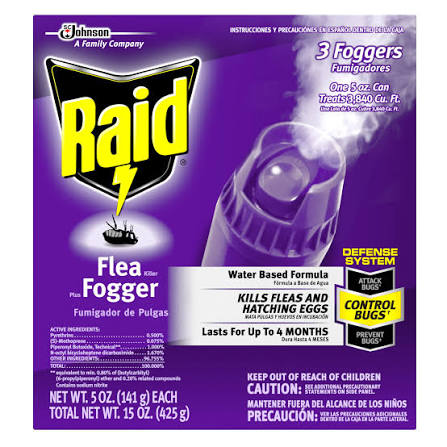
Fleas are miserable. You wake up with bites around your ankles, the dog won’t stop scratching, and somewhere in the back of your mind a can of flea bomb on a hardware store shelf starts sounding like salvation. Press the button, leave for the day, done. I get the appeal. But Aptive Pest Control updated its flea bomb guidance for pet owners in May 2026, and the advice is still lukewarm at best: these things kill the fleas you can see and mostly ignore the ones you can’t. With the weather turning and everyone, pets included, spending more time indoors, plenty of people will be standing in that aisle soon. Worth knowing what you’re actually buying.
Why Do Flea Bombs Kill the Wrong Fleas?
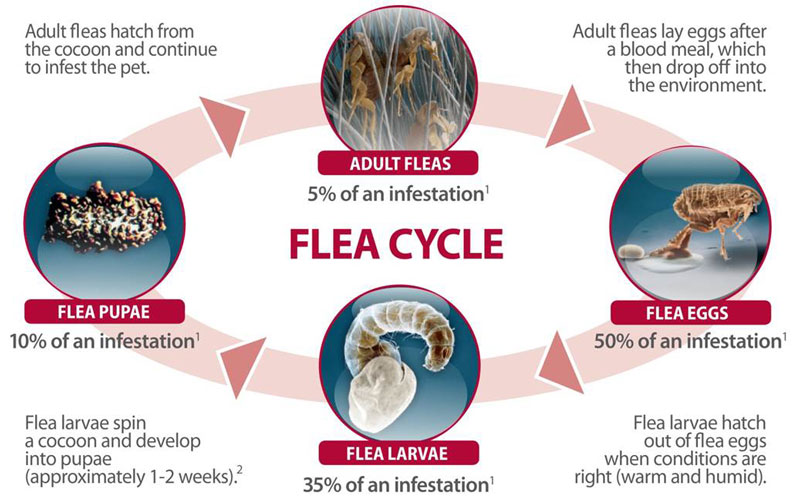
A flea bomb, or total release fogger, empties the whole can in one burst and fills the room with insecticide mist. Most use a pyrethroid like permethrin. Some add a growth regulator, and that detail matters more than it sounds. Petful’s vet-reviewed guide puts the core problem plainly: the mist settles on open surfaces, but eggs, larvae and cocooned pupae sit down in the carpet where it never gets.
Think about where fleas really live. The jumping adults on your sofa are the tip of it. Underneath, in carpet fibers, bedding and the cracks between floorboards, there’s a whole hidden population in earlier life stages. Pupae are the worst. They can sit dormant for weeks, even months, waiting for a warm body to walk by. So you bomb the house, the adults drop, and a week or two later a fresh wave hatches and you’re back to square one, now with a chemical film on your counters. Bob Vila’s team says much the same: the spray doesn’t get under furniture or into carpet, and bombs have been shown to be largely useless against eggs and larvae.
Not every pro writes them off completely. Tim Sherrer, who owns Expest Exterminating in Snellville, Georgia, told Bob Vila that many foggers mostly kill adults on contact and may not break the full life cycle. He points people to Precor, which contains a growth regulator. One review roundup claims Hot Shot’s Nylar-based fogger can hold off reinfestation for up to seven months. Same story each time. When a fogger does better, it’s the growth regulator earning the credit, not the fog.
3,222 Cases Later: What the Box Doesn’t Tell You
The safety side is where I’d slow down. In 2008 the CDC counted 466 illnesses and injuries linked to total release foggers across eight states, covering 2001 to 2006. EPA reacted with label changes that had to be in place by September 30, 2011. No more than one can per room. Nothing in small enclosed spaces. Ignition sources off, food covered, room aired out before you walk back in.
You’d hope that fixed it. It didn’t, at least not according to the numbers. A later CDC report on 2007 through 2015 found 3,222 unique cases, and Beyond Pesticides, an advocacy group that opposes these products, called the label changes a failure. The CDC’s own report said some people ventilated for the recommended time or longer and still got sick. That’s a hard line to read. It also covers a 10-month-old boy in Williamston, South Carolina, who died after his mother set off several bombs in their home, a case that helped push EPA to look at foggers in the first place.
To be fair, EPA’s own analysis was calmer. It found fires and explosions were rarer than exposure incidents, and that a lot of the trouble came from warnings that were confusing or badly placed. Still, plenty of foggers use flammable propellant, which is why guides keep telling you to put out pilot lights and cover electronics. The Bug Squad adds a note for asthma: an attack can come on days after treatment. The common thread is human error. These cans are made to be easy, and easy is a bad quality in something this toxic.
If You’re Going to Fog Anyway
Fine. Some people will, and I’d rather you do it carefully than carelessly. The vet and pest-control sources I read agree on most of this.
Get everyone out, pets too. Birds especially, since they’re extremely sensitive to the fumes. Cover or put away food and dishes. Unplug or cover electronics, and make sure every pilot light is off. Use one fogger per room, sized for that room, and never inside a closed cupboard. Stay away for the entire time printed on your product’s label, then open windows and ventilate well before anyone comes back.
After that comes the boring part, and don’t skip it. Aptive notes that residue can stain floors and furniture, and The Bug Squad says to wipe down surfaces and vacuum thoroughly, since you’ve basically coated your house. One last thing people forget: the bomb does nothing for fleas living on your pet. If the dog or cat isn’t treated, the whole afternoon is wasted.
What Really Works (And It’s Not Glamorous)
Start with the animal. Your pet is what keeps restocking the house, so ask your vet which flea preventive suits them, and treat every pet at the same time, not just the one that’s scratching.
Then deal with the house the slow way. Vacuum carpets, rugs, upholstery and room edges every day for a few weeks, and get that bag or canister out of the house afterward. Wash bedding, yours and the pet’s, on hot. It’s tedious, but it pulls out eggs and larvae no mist would ever reach, and the vibrations may even coax dormant pupae to hatch so they meet your treatment.
If you want something stronger on top, a residual spray with a growth regulator, applied along baseboards, under furniture and at carpet edges, reaches places a fog can’t. Be patient, though. Expect weeks, maybe a couple of months, because pupae hatch on their own schedule. If it drags on, call a licensed pest professional before you buy another can.
Quick Answers Before You Buy
Do flea bombs actually work?
Only in part. They kill exposed adult fleas, but they largely miss eggs, larvae and pupae hidden in carpet and under furniture, so fleas often return within a couple of weeks.
Are flea bombs safe for pets and kids?
Not while they’re working. People and pets must stay out for the full label time, and the CDC has documented thousands of illnesses and injuries from total release foggers, including among people who ventilated as directed.
How long should I stay out after setting one off?
Go by the label on your product, because it varies. Then ventilate thoroughly before anyone re-enters, and wipe down the surfaces kids and animals touch.
What should I use instead?
Treat every pet with a vet-recommended product, vacuum daily, wash bedding hot, and add a targeted residual spray with a growth regulator. That covers every life stage, not just the adults you can see.
Bomb the Life Cycle, Not the Living Room
Flea bombs survive on a feeling of control. You press, it hisses, you leave, and it seems like something big happened. The evidence says otherwise: adults die, the real problem keeps hatching, and the safety record is worse than the box suggests. If you do use one, treat the label like a safety protocol, not a suggestion. If you want fleas gone for good, treat your pets, vacuum more than feels reasonable, and break the life cycle at every stage