Type “k9 harnesses for dogs” into Google and you’ll find two very different crowds. Police and military handlers use handle-topped, mil-spec gear. Regular owners mostly buy Julius-K9, often for dogs that have never done a day of police work. That overlap trips people up. Every 2026 buying guide I read still splits harnesses into back-clip and front-clip, but a 2024 motion-capture study showed something less talked about: even custom-fit tactical harnesses change how a dog’s front legs move. Fit, clip position and your dog’s build matter more than the tactical look, so here’s what to know before you spend $30 or north of $300.
Police Gear or Pet Gear? What “K9” Really Buys You
Working harnesses are all about control and lifting. Ray Allen’s Icon Air costs $314.99, is rated to 2,000 pounds, has a grip handle on top and comes in three sizes. Their Kinetic Duty uses 1.75-inch mil-spec webbing with quick-release buckles. It suits deep-chested dogs like German Shepherds, with a girth range of 28 to 36 inches.
Handlers think about things pet owners never do. A Las Vegas Metro K9 fundraiser pointed out that ballistic vests can overheat dogs in hot weather, so the unit asked for a breathable harness with lifting handles, at $155 each. Armor still has its place. Vested Interest in K9s says it has given out 6,225 vests since 2009, each worth nearly $2,000, and New Zealand police went with stab-resistant Mako harnesses that weigh just over a kilo.
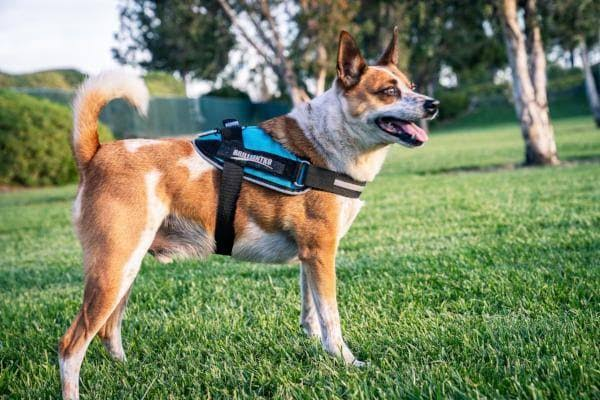
So how much of that do you need when shopping for k9 harnesses for dogs at home? A top handle is handy for lifting a dog into the car or up steps. Mil-spec webbing on a small companion dog is overkill. The Julius-K9 IDC, the usual civilian pick, has a water-repellent cover, a top handle and leash ring, and Velcro side strips for patches. One retailer’s chart puts Size 2 at 61 to 88 lbs (28 to 38 inch chest) and Size 3 at 88 to 150 lbs.
The Shoulder Question Nobody Asks at the Pet Store
The research on k9 harnesses for dogs is thin, but what exists is interesting. A 2024 study in Veterinary and Comparative Orthopaedics and Traumatology put custom-fit tactical harnesses on five adult dogs weighing 25 to 35 kg and tracked their joints with motion capture. Elbow movement went up. Shoulder and carpus movement went down, and shoulder flexion dropped at a walk. The authors admit nobody knows yet what that means clinically, especially for dogs that work all day in one.
Another 2024 paper, an undergraduate project, tested six pet harness types against a plain collar on 30 dogs. A straight-front harness allowed the most shoulder and elbow movement, and a front-clip design allowed the least. The authors also noticed that results depended heavily on each dog’s build. It’s a small, student-run sample, so treat it as a hint rather than proof.
I wouldn’t read any of this as a reason to go back to a collar and put pressure on the neck. It does mean you should pay attention. Pick a design that keeps the straps away from the shoulder and get the fit right. If your dog has ever had shoulder or elbow problems, check with your vet before making k9 harnesses for dogs an all-day habit.
Why Do Some Dogs Slip Out? The Fit Mistakes That Matter
Most escapes come down to adjustment. Julius-K9’s own guide says to measure the chest, leave room for two fingers between harness and dog, and set the belly strap about four finger-widths behind the front legs on sizes 0 to 4. They also warn that a front strap sitting too high or too low lets a dog back right out. That’s the first thing to check with k9 harnesses for dogs.
Owner reviews add some honesty. People love the strength and the handle, but a few complain about Velcro that won’t stay stuck and dogs that wriggle free. One buyer said a replacement came with a plastic D-ring that felt weaker than the old metal one. Another had to keep the chest strap quite tight to stop it sliding sideways, and warned about hair getting caught in the buckle. A long-time user who wears them at work put it neatly: you’ll either love it or find it useless.
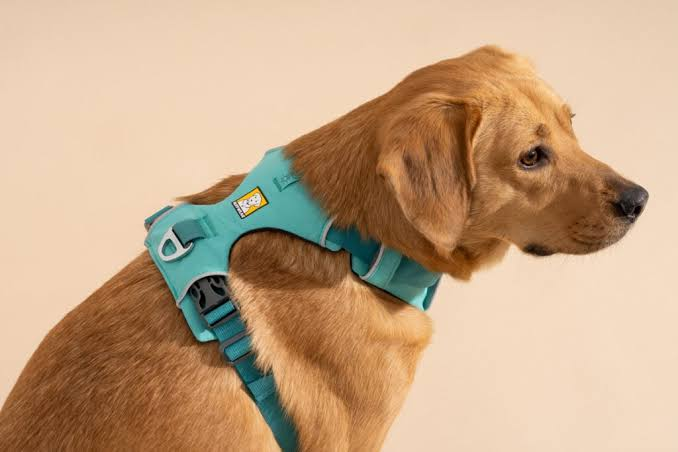
Pick the clip for your actual problem. Back-clip harnesses are usually more comfortable for most dogs, while front-clip ones suit dogs that pull or lunge. A K9 top ring gives you control, but it isn’t a training tool. Keep checking the fit, too. Puppies outgrow harnesses fast, and a daily-wear one needs its buckles and strap ends looked over now and then.
Four Questions Buyers Keep Asking
Are k9 harnesses for dogs only meant for working dogs?
No. Julius-K9 and similar brands sell to pet owners, and the IDC range is promoted for sports, rough terrain and working dogs. The handle and strength are the appeal, but it still has to fit your dog’s body.
What size K9 harness does a German Shepherd need?
Go by chest girth, not weight alone. By one retailer’s chart, a 61 to 88 lb dog lands in Size 2 and an 88 to 150 lb dog in Size 3. Ray Allen’s Kinetic Duty covers girths of 28 to 36 inches. Measure first, then check that specific brand’s chart.
Do k9 harnesses for dogs stop pulling?
Not by design. The leash point sits on top, which suits control and lifting. Experts point pullers toward front-clip harnesses. Your dog might pull less simply because the neck pressure is gone, but that isn’t training.
Is a harness safer than a collar?
For pullers and dogs with sensitive necks, usually yes, since a chest harness spreads force across the chest and ribcage. The catch is the gait effect above, so k9 harnesses for dogs work best when they’re fitted carefully and not worn around the clock.
The Bottom Line
Good k9 harnesses for dogs justify their price when you need a solid handle, tough webbing and a snug fit that’s hard to wriggle out of. They won’t cure pulling, and no design leaves a dog’s movement untouched. Measure the chest, follow the maker’s fitting guide, recheck the straps, and choose by your dog’s build, not by how tactical it looks.