Packing for a trip with your dog usually goes fine until someone asks where he’s going to sit. Then it gets complicated. Choosing a dog crate for travelling sounds simple, but the market is crowded, the labels are vague, and 2026 has brought fresh guides, tighter airline rules and more talk about crash testing than ever. A good crate keeps your dog calm on the road. A bad one can fail at exactly the wrong moment. So let’s separate the real from the marketing.
Does “Crash-Tested” Actually Mean Anything?
Honestly, not always. In the US there’s no federal standard behind that phrase, so any brand can print it on a box. The Center for Pet Safety, an independent nonprofit, runs its own collision tests with purpose-built test dogs, and the results weren’t pretty for some products. One soft carrier launched its dummy into the air. One hard crate simply came apart.
The Gunner G1 Kennel is the name that comes up most for car trips, with a 5-star rating from that group. The Lucky Dog Large kennel is also listed as certified, tested with a 110-pound dog. If safety is your priority, don’t take a brand’s word for it. Look the crate up on the Center’s certified list before you buy any dog crate for travelling.
Soft, Plastic or Heavy-Duty: Pick by Trip, Not by Price
Soft crates are light and easy. Something like the EliteField 3-Door folds flat, and some models weigh only about 10 pounds, which is lovely for hotels and camping. They work for calm dogs that already like being crated. If yours chews or panics, the zipper will be the first thing to go.
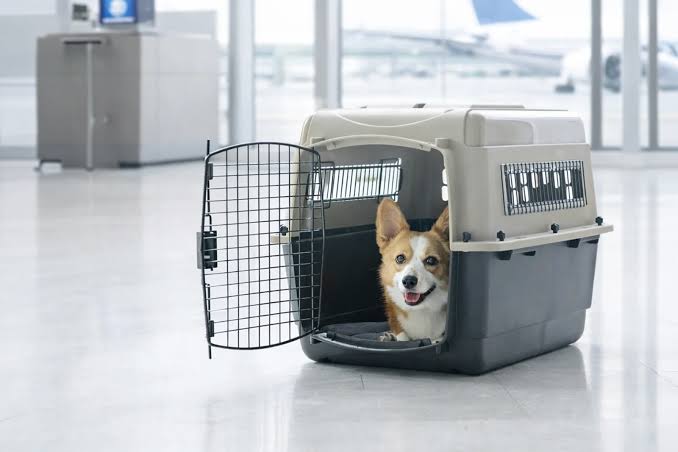
Plastic kennels like the Petmate Ultra Vari or Sky Kennel are the usual pick for flying, and they’re kind to your wallet. Rotomolded crates cost a lot more but handle long road trips and truck beds without complaint. You don’t need to spend a fortune, either. A basic soft or plastic model is plenty for vet visits and short errands. Basically, the best dog crate for travelling depends on whether you’re mostly driving, flying or camping.
Getting the Size Right
Measure your dog from nose to the base of the tail and add 2 to 4 inches. He should be able to stand, turn around and lie down without folding himself up. Too tight is miserable. Too roomy and he’ll slide around every time you brake.
As a rough guide, a Chihuahua fits 19 to 22 inches, a Cocker Spaniel around 28 to 30, a Labrador 36 to 42, and a German Shepherd needs 48 or more. Sizes vary by brand though, so treat any dog crate for travelling size chart as a starting point and trust your tape measure.
Flying With Your Dog: The Rules That Trip People Up
IATA’s standards ask for a crate big enough to stand, turn and lie down in, with ventilation on all four sides. Plastic crates need metal nuts and bolts holding the halves together, and the crate must be marked “Live Animals” with your contact details. Ventilation gaps shouldn’t be wider than 1 inch for dogs. And those plastic snap latches? A lot of international carriers reject them.
Weight matters too. Dogs over about 22 pounds (10 kg) usually can’t ride in the cabin and go in the hold instead. One 2026 guide says Air Canada now wants soft-sided carriers for in-cabin pets. A crate turned away at check-in is a nasty surprise, so measure it and check the fastenings a few days ahead. Read your own airline’s policy before you order, since it often decides which dog crate for travelling you’re allowed to use.
Don’t Unbox It on Departure Day
This is the mistake that catches most people out. New crate, big trip, nervous dog. Set the crate up at home at least two weeks before you leave. Feed him in it, toss in a blanket that smells like home, and keep the door open. When he starts napping in there on his own, you’re ready.
In the car, strap the crate down or anchor it properly, because a loose crate becomes a hazard in a crash. Stop every few hours for water and a stretch. And put something familiar inside your dog crate for travelling. It’s a small thing that helps a lot.
Quick Answers Before You Shop
Is a soft crate okay for a long road trip?
If your dog is calm and used to being crated, yes. For chewers, anxious dogs or big breeds, go hard-sided.
What’s the best dog crate for travelling overall?
There isn’t one winner. For cars, the Gunner G1 leads on crash safety. Petmate’s plastic kennels are a common choice for flights, and the EliteField 3-Door is good value if you want a soft crate.
Will every crate be accepted on a plane?
No. Airlines and IATA set their own rules on size, ventilation and latches, and cabin travel often needs a soft carrier.
Do I still need crate training before using a dog crate for travelling?
Yes. A stressed dog can hurt himself or try to escape. A few weeks of practice makes the trip calmer for everyone.
Before You Buy
The right dog crate for travelling fits your dog, your way of travelling and your airline’s rules. Check crash-test claims properly, measure twice, and give your dog time to get used to it. Do that and the trip gets a lot less stressful.