Here’s a scene most dog owners know too well: you spend forty quid on a bed, your dog sniffs it once, and then goes right back to sleeping on the sofa. It’s not that the bed was bad. It’s that it wasn’t the right bed. Pets at Home dog beds cover an enormous range — cushions, cave beds, orthopaedic foam, heated pads — and honestly, that’s both the good news and the problem. More choice means more ways to get it wrong. So instead of just listing what’s on the shelf, let’s actually work through how to pick the right Pets at Home dog bed for the dog you actually have, not the dog on the packaging.
Bigger and Softer Isn’t Automatically Better
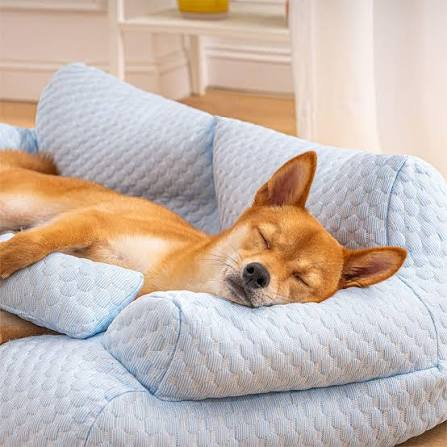
I get why people default to “biggest, plushest bed I can afford.” But dogs aren’t uniform little sleep machines — some curl up so tight they look like a cinnamon roll, others sprawl out like they own the place. If yours is a curler, a raised-rim or cave-style bed tends to work better, since the sides give that den-like, tucked-in feeling. If yours sprawls, that same raised edge is just something to shove out of the way, and a flatter mattress-style bed from the Pets at Home dog beds range will actually get used.
And then there’s sizing, which — I’ll be blunt — most people get wrong in the same direction. Too small, every time. Lay your dog flat, measure nose to tail, add a good few inches of breathing room. Skimp here and you’re just buying the same problem in a nicer fabric.
The Orthopaedic Label Is Worth Actually Checking
Not every bed calling itself “orthopaedic” deserves the word. Plenty are just a slightly firmer cushion with better marketing. A proper orthopaedic bed from the Pets at Home dog beds selection uses dense memory or egg-crate foam — the kind that springs back rather than flattening into a pancake after a few months. This is the one worth spending on if your dog’s older, on the heavier side, recovering from something, or just seems stiffer getting up than they used to. A collapsed foam base stops doing its job precisely when your dog needs it most.
Calming Donut Beds, and What They Can’t Fix
The donut-shaped calming bed has become one of the most-searched Pets at Home dog beds for a reason — it’s aimed squarely at the dog who won’t settle. Pacing, circling three times before lying down, flinching at the bin lorry outside — that kind of dog often does better with something to lean their head against. But let’s not oversell it: it’s not a fix for real separation anxiety or noise phobia, no bed is. Think of it as one piece of a calmer setup, not the whole solution.
Heated Beds: Great for Some Dogs, Pointless for Others
I wouldn’t call heated beds essential, but I also wouldn’t call them a gimmick — it depends entirely on the dog. Older dogs, short-haired breeds, tiny dogs — they lose heat fast, and a low-wattage heated pad genuinely helps through a cold winter in a draughty house. A young, thick-coated, healthy dog basically doesn’t need one, and the electricity bill over a season isn’t nothing. If you do buy one, look for a chew-resistant cord and an automatic thermostat rather than a single fixed heat setting.
Puppy Beds: Buy For Now, Not for the Dog They’ll Grow Into
Don’t buy the expensive bed first. Puppies chew everything, including beds, and a pricey orthopaedic model is basically asking to be destroyed within a fortnight. A cheaper, fully washable puppy bed from the Pets at Home dog beds range makes far more sense early on — partly because accidents happen, and partly because most puppies genuinely prefer something smaller and more enclosed anyway.
Cushions, Mattresses and XL Beds: Fit the Bed to the Room
If there’s no medical or behavioural reason to go specialist, a plain cushion or mattress bed is usually the sensible pick, especially in a smaller home where a big bolstered bed just eats floor space. On the flip side, if you’ve got a giant breed, or two dogs who insist on piling onto one bed together, don’t be shy about going extra-large — undersizing here is one of the easiest mistakes to avoid.
Frequently Asked Questions
How often should I replace my dog’s bed? A standard cushion bed usually holds up for twelve to eighteen months before the filling compresses and stops offering real support. Genuine orthopaedic foam lasts noticeably longer, often two to three years.
What size dog bed should I get for a medium breed? Measure nose to tail while your dog’s lying flat, then add a few inches of margin. That measurement usually puts most “medium” breeds into the large size bracket, not medium.
Are heated dog beds safe to leave on overnight? Only with a low-wattage heating element, an automatic thermostat, and a properly sheathed, chew-resistant cord. Skip leaving any heated bed running unattended around a dog that likes to chew.
Do calming donut beds actually help with anxiety? They can help physically — giving a dog something enclosed to settle against — but they’re treating a symptom, not the cause. If the anxiety’s persistent, that’s a vet conversation, bed or no bed.
The Bottom Line
There’s no single “best” bed here — just the one that actually matches your dog’s size, age, joints and the way they naturally sleep. Watch how they rest now, size up rather than down, and treat “orthopaedic” as a real feature to check for rather than a word on a label. Whichever style you land on, choosing carefully from the wider range of Pets at Home dog beds rather than grabbing the first thing on the shelf is what actually gets the bed used.