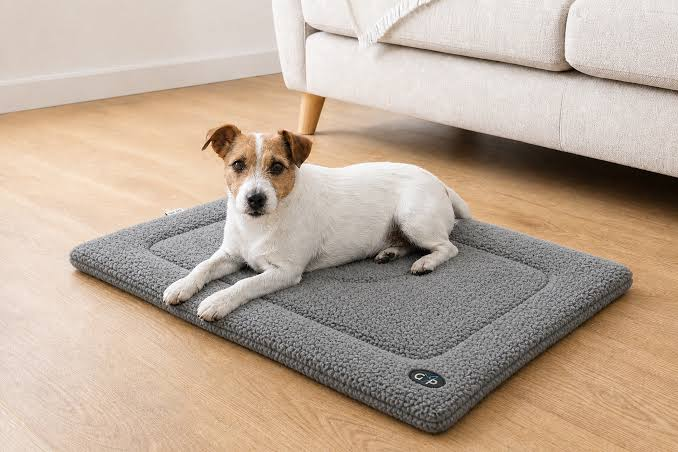
Shopping for a dog crate mat looks simple until you read the fine print. This month’s buying guides are full of “chew-proof” promises, while veterinary and trainer advice keeps repeating the opposite warning: a mat your dog can shred is worse than no mat at all. A standard 36-inch crate mat from a mainstream retailer like Chewy still costs about $25, while reinforced versions run much higher, so the choice affects both your budget and your dog’s safety. Here is how to choose a crate mat that fits, suits your dog’s habits, and survives the washing machine.
Is a Crate Mat Even Safe for Your Dog Yet?
Before comparing products, decide whether your dog should have a mat at all. Rover’s puppy-crate guidance says some puppies do beautifully with bedding while others chew it or have accidents on it. For those puppies, the advice is to start with a bare crate floor and introduce a mat later. The risk is real: swallowed fabric or foam can lodge in the digestive tract. The Whole Dog Journal says removing the bedding while you work on the chewing is better than dealing with an intestinal obstruction.
Context matters too. Pupford points out that if the shredding happens mainly when your puppy is alone, it may signal separation distress rather than boredom. In that case a tougher mat won’t fix the problem, and a trainer or vet conversation will do more good. Rover also lists electric heating pads among the things to keep out of a puppy’s crate, since curious puppies may chew the wiring.
Adult dogs who have never destroyed a bed are a different story. For them a mat is mostly about comfort, joint relief and keeping the crate floor from feeling like cold plastic or wire.
The Sizing Mistake That Makes a Good Mat Useless
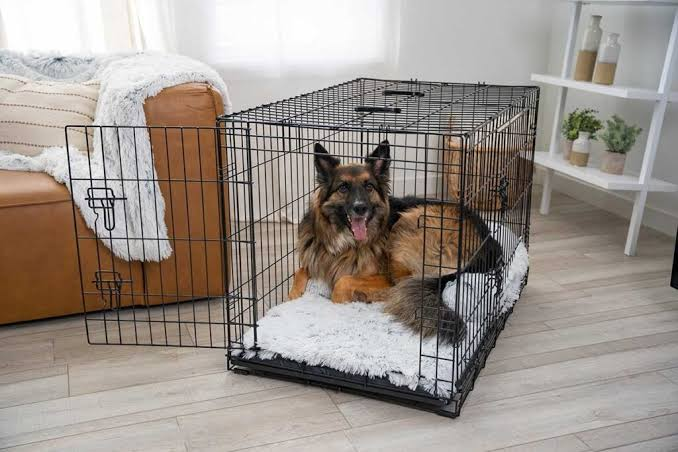
Most owners buy by the crate’s label, assuming a “36-inch crate” needs a 36-inch-square mat. Crates are measured by length, and a 36-inch wire crate is only about 24 inches wide inside. Manufacturers generally size mats to the interior floor, so a mat for that crate typically measures roughly 24 by 36 inches. The usual pairings run 18 by 24 inches for a 24-inch crate, 21 by 30 for a 30-inch, 28 by 42 for a 42-inch, and 30 by 48 for a 48-inch.
Measure your own crate floor before ordering, because dimensions drift slightly between brands. A mat that is too small leaves gaps a puppy can paw into, and one that is too large bunches up at the corners, giving a chewer an easy edge to grab. Edges and seams are where destruction starts, which is why one chew-focused review site weighs them so heavily.
Thickness is the other number that gets overlooked. Listings range from about 1.2 inches on budget quilted mats to 2.5 inches on plush pads. Thicker feels better to a senior dog, but one Chewy reviewer noted the sweet spot is cushy without being so thick it soaks up urine. Dogs with accidents do better with a thinner, waterproof option.
Fleece, Quilted, Cooling or “Chew-Proof”: What You Really Get
The mainstream options are easy to find. Chewy’s Frisco Swirl 36-inch mat holds a 4.6-star rating across more than 3,500 reviews at $24.99, and Dogster picked the MidWest Quiet Time fleece mat as its best overall, available in eight sizes and machine washable. These are the sensible choices for dogs that leave their bedding alone.
Chew-resistant mats are a separate category. Brands like Bully Beds, MABOZOO and HOMBYS market reinforced fabrics and tough seams, and some add metal reinforcement or multiple layers. Treat the wording with caution, though. Even Chewy’s Frisco listing describes the mat as resistant to light chewing and says it may not withstand long, persistent chew sessions. One chew-proof bed roundup states it plainly: no bed survives every determined chewer, so supervise your puppy and call a vet if you suspect swallowed fabric.
If you live somewhere hot, cooling mats are worth a look. Chewy’s cooling-mat list includes the Arf Pets self-cooling gel mat and Bedsure’s thin machine-washable cooling mat, both sold in crate sizes. Whatever you choose, a non-skid bottom stops the mat sliding every time your dog turns around.
Washing, Accidents and the Spare Mat Habit
A crate mat will get dirty, so machine-washable construction should be non-negotiable. Follow the care label, since some soft mats, like the HuggleHounds faux lambswool line, call for a low-temperature wash and can be tumble dried. Owning two mats means one is always clean and dry while the other is in the wash.
For puppies who have accidents overnight, Preventive Vet suggests talking to your veterinarian about removing water an hour or two before bedtime. Don’t change water access without that conversation, though, especially for very young or small puppies. If accidents keep happening on a mat, a thinner waterproof version or a bare floor with a washable towel may serve you better than plush fleece.
Questions Owners Keep Asking
Should a new puppy have a crate mat?
Only if the puppy leaves it alone. If your puppy chews or shreds fabric, start with a bare floor and add a mat once the chewing settles. Always supervise new items before leaving the crate unattended.
What size crate mat do I need?
Match the mat to the interior floor of the crate, not the number on the box. A 36-inch crate usually takes a mat around 24 by 36 inches. If your puppy is growing into a bigger crate with a divider, size the mat to the space they can currently use.
Are chew-proof crate mats really indestructible?
No. Even products sold as chew-resistant carry caveats about persistent chewers. Look for reinforced seams, minimal loose edges and washable construction, and remove the mat if you see your dog pulling threads or ingesting fabric.
Can I use a blanket or towel instead?
Yes, for many dogs. The Labrador Site suggests old towels or blankets cut to fit as perfectly serviceable puppy bedding, and also recommends veterinary-style synthetic fleece, which is washable and hard-wearing. They are cheap to replace if they get chewed.
The Bottom Line
The best dog crate mat is the one that fits the crate floor, stays in one piece and matches your dog’s habits, not the one with the boldest label. If your dog chews, hold off on bedding or choose reinforced options and supervise closely. If they don’t, a washable, properly sized mat is an inexpensive way to make the crate feel like a comfortable den.