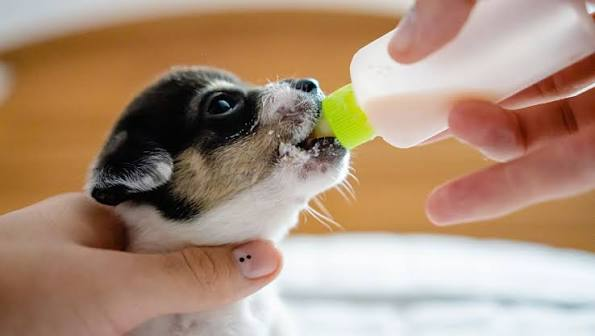
Nobody plans for this. You’re not sitting around thinking, “What if I end up feeding a two-day-old puppy?” Then one day it happens. A stray gives birth and disappears. A first-time mother refuses her litter. A friend hands you a box with a tiny, squeaking bundle in it and says, “Can you help?”
Suddenly you need answers fast. So let’s get to them.
Let’s Start with Why This Matters
Newborn puppies don’t have much margin for error. A research team at the University of Liège in Belgium reports that about one in ten live-born puppies dies before two months of age. Most of those deaths, 70 to 80 percent, come in the first three weeks.
A Norwegian study in Acta Veterinaria Scandinavica looked at four large breeds. Among live-born puppies, 6.9 percent died in the first three weeks, and roughly two thirds of those died within three days. Older research it cites puts overall losses, stillbirths included, between 17 and 30 percent across eight weeks. And a University of Sydney thesis found that more than 90 percent of the losses it tracked happened at birth or during the first week.
The takeaway is simple. The first days count, and what goes into that tiny stomach counts most of all.
Can’t I Just Use Regular Milk?
No. It’s the first thing everyone tries, and it’s the thing vets most want you to skip.
Here’s what’s wrong with it, according to VCA Animal Hospitals. Dog’s milk has more than twice the protein of cow’s milk. Cow’s milk also has fewer calories, less fat and fewer minerals, but more lactose. The American Kennel Club says it doesn’t provide enough calcium or phosphorus for a growing puppy either.
In practice, that often means diarrhea and tummy trouble. For a newborn, diarrhea isn’t a minor annoyance, because dehydration can set in quickly.
What about goat’s milk? Plenty of people swear by it, but PetCoach says it isn’t nutritionally equivalent to a puppy milk replacer. Human baby formula isn’t a match either, since it’s made for a different species.
So What Should You Buy?
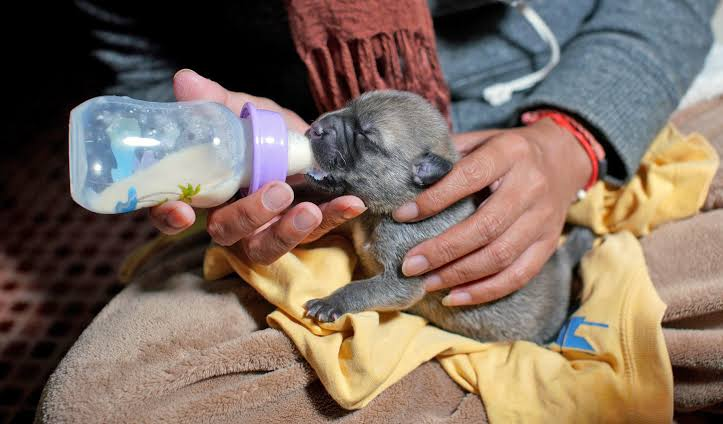
A commercial puppy milk replacer. It’s made to mimic canine milk, and vets say it beats both cow’s milk and homemade mixes.
VCA lists what a good one looks like. Per 100 grams of product on a dry matter basis, you want around 33 grams of protein, 42 grams of fat and 14.5 grams of lactose. That’s a lot of fat and protein, and it needs to be, because puppies grow remarkably fast.
You’ll see two types in shops, powder and ready-to-use liquid. Powder keeps longer. Liquid saves you effort at 3 a.m. Both work, as long as it says complete and balanced for puppies. If you’re unsure which to pick, ask your vet. Some formulas also contain colostrum, the antibody-rich first milk.
On colostrum: according to Petco’s vet-reviewed advice, a puppy should ideally nurse from her mother in her first 12 hours to get it. If that didn’t happen, talk to a vet about what comes next.
Feeding Day to Day
Even the right formula can go wrong if the feeding goes wrong. Here’s what vet sources stress.
Warm it up. Aim for roughly 100°F (38°C). VCA also warns that cold formula can lead to regurgitation, aspiration, bloating and diarrhea. A cold puppy often won’t eat, so warm her up first.
Watch the position. Keep her on her belly, as if she were nursing. Not on her back. She should suck the milk out herself. Don’t squeeze it into her mouth, because milk in the lungs can cause pneumonia.
Burp her. Yes, really. During and after feeding, just like a human baby.
Help her go to the toilet. This is the bit nobody warns you about. In nature, the mother licks her puppies to make them urinate and defecate. Orphans can’t manage on their own, so Petco says you must stimulate them at every feeding, using a warm, damp cloth or cotton ball.
Stay on schedule. VCA recommends feeding every two to four hours, and younger puppies lean toward the shorter gap.
Don’t overfeed. VCA says that slightly underfeeding is better than overfeeding a newborn. If diarrhea appears, reduce the amount. For a starting point, VCA lists about 15 kcal per 100 grams of body weight in the first three days, then more as she grows. Different brands vary, so follow the label and your vet.
Keep bottles and nipples clean. Wash and dry them fully between feeds.
Is She Doing Okay?
Weigh her daily. A cheap kitchen scale does the job, and weight is the best early signal you have. If it stops rising, or drops, call the vet that day.
A thriving puppy is quiet and settled between feeds, has a round but not tight belly, and goes to the toilet regularly. Be worried about constant crying, limpness, diarrhea that lingers or a puppy who refuses to suck. Newborns can decline in hours, so don’t wait and see.
When Does the Bottle End?
VCA says milk replacer should be the only food until about three to four weeks. Weaning can start then. A common method is to offer replacer in a shallow dish, then stir in softened puppy food until it becomes a thick mush. Breeds differ in how fast they develop, so ask your vet about timing.
The Homemade Formula Question
Recipes with cow’s milk, egg yolks and oil are all over the internet. They exist for emergencies, like when it’s midnight and nothing is open. They aren’t a long-term plan, and even the sources that share them say commercial products are better. If you’re stuck, phone an emergency vet and buy proper replacer as soon as possible.
One Last Thing
A proper replacer, served warm, on schedule, with toilet help and a daily weigh-in, gives an orphaned puppy a real chance. Cow’s milk, goat’s milk and baby formula can do harm, and your vet is the best support you’ll have from day one.
This is general information, not veterinary advice, so have any newborn puppy checked as soon as you can.